
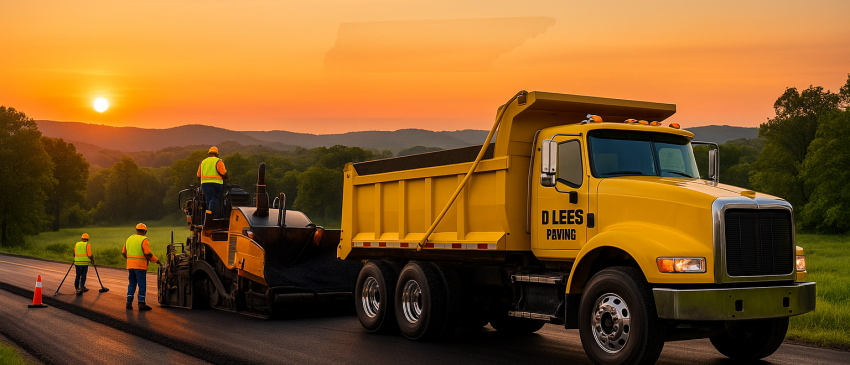
Want a smooth blacktop that actually lasts? Start with a simple plan—fix grades and drainage first, then build the mat. This guide breaks down the choices for Tennessee homeowners, HOAs, and businesses, plus timelines, pricing drivers, and maintenance that keeps everything looking new.
When it is time to pave (not just patch)
-
Potholes or cracks keep coming back in the same spots
-
Birdbaths or ponding near curbs, doors, or drains
-
Alligator cracking and ruts showing through old overlays
-
Raised trip edges where asphalt meets concrete aprons or sidewalks
-
Driveway looks dull and sheds gravel (raveling)
Your options in plain English
-
New pave – Install or replace with the right base, thickness, and mix for the use (driveway vs parking lot).
-
Mill and overlay – Remove 1–2 inches to reset grades and heights, apply tack, and pave a dense, smooth lift.
-
Overlay only – Fastest initial option, but it does not correct elevations or drainage.
-
Targeted repairs – Cut-out patches, crack sealing, and sealcoating to extend life until a larger project makes sense.
What really drives the price
Square footage, total thickness, base repairs, milling depth, striping and ADA scope, site access for trucks/rollers, and phasing (keeping businesses open). Ask for good / better / best options so you can see how much life each step adds.
Ready for your quote? Call or Text us Today: (615) 579-1766

How D. Lee’s Paving delivers a smooth ride
-
Site walk and plan – check grades, drains, and tie-ins
-
Prep and base – saw cuts, proof-roll, base touch-ups where needed
-
Milling (if needed) – 1–2 inches to correct profile and heights
-
Tack coat – uniform bond for the new lift
-
Pave and compact – proper rolling sequence for density and quiet ride
-
Finish and stripe – clean edges, crisp markings, ADA done right
-
Care guide – when to drive, and how to avoid scuffs in hot weather
Timelines you can expect
-
Driveways – often measured and paved within a week of approval (weather permitting)
-
Small lots – 1–2 days with phasing to keep tenants moving
-
Larger centers – scheduled in sections; clear signage and safe pedestrian routes
Simple aftercare that extends life
-
Avoid tight power-steering turns for 24–48 hours in hot weather
-
Keep heavy trucks off fresh driveways until we give the green light
-
Sealcoat every 2–3 years; crack seal early to stop water intrusion
-
Keep drains clear so water leaves the pavement fast
Quick Q and A for Tennessee property owners
Is milling better than overlay?
If you have ponding or height issues at curbs or doors, yes—mill first to reset the grades, then pave.
How thick should a driveway be?
Many homes do well around 2 inches total on a solid base; steeper or heavier-use sites may need more.
When can I drive on new asphalt?
Light car traffic is often same day after rolling; avoid tight turns and scuffing for 24–48 hours in heat.
Do you keep businesses open during paving?
Yes—cones, flaggers, and clear phasing so people keep moving while work continues.
Some of the Tennessee cities we serve:
Chattanooga • Knoxville • Nashville • Clarksville • Murfreesboro • Franklin • Johnson City • Kingsport • Jackson • Cleveland • Cookeville • Collierville • Smyrna • Brentwood • Gallatin • Hendersonville • Lebanon • Mount Juliet • La Vergne • Spring Hill • Columbia • Tullahoma • Manchester • Oak Ridge • Sevierville • Pigeon Forge • Maryville • Morristown • Sparta • Shelbyville • Goodlettsville • Dickson • Paris • Dyersburg • Tazewell • Greeneville • Newport • Athens • Dayton • Madisonville
Do you have Questions call or Text (615) 579-1766

No Comments
Be the first to start a conversation